I’ve spent over 30 years in the IT industry, which means I spend at least eight hours a day, Monday through Friday, in front of a computer screen. So, when I have free time in the evening and weekends, I like to step away from screens. It reminds me of the last decade of my father’s career, working in Master Control at our local Fox affiliate in Salt Lake City, Utah. At the end of each shift, all he wanted was to disconnect from television. Even after he retired, he never enjoyed watching TV the way he once did.
On the other hand, my dad spent most of his life in broadcasting, starting in radio at just 16 years old. He lived and breathed the industry—when he wasn’t working on-air or management duties, he was constantly researching, reading, expanding and sharing his knowledge of broadcasting. It was his passion, both on and off the clock.
Apologies for the tangent—let me get back on track. Over the past seven years, I’ve found the process of culling and editing photos to be both daunting and annoying. Why? Because after spending so many hours in front of a computer each day, the last thing I want is to spend even more time staring at a screen. I’d call it computer or pixel fatigue.
Let me back up for a moment. Last summer, my wife and I spent two weeks in Italy—a country I absolutely love! Traveling with her to exciting destinations, trying new foods, and capturing those bucket-list shots is one of my favorite things to do.
For this trip, I brought four cameras: a Canon 6D Mark II (digital SLR), a Canon 10S (film), an Olympus XA (film), and a Minolta P’s (film). Each had its own purpose—the 6D Mark II for bucket-list shots with RAW files, the Canon 10S for black and white 35mm film and an autofocus lens, the Olympus XA for its compact, pocketable size, and the Minolta P’s for fun panoramic shots. Realistically, my phone could have handled everything, but where’s the fun in that?
Now, here we are in February 2025, and I’m only just finishing the edits on my digital photos. I haven’t even started cropping or adjusting anything from the film rolls. Why? Because that would mean more time in front of a computer after already spending my workdays at one. And to get through it, I need two things I’m not particularly great at—discipline and patience.
I refuse to let computer fatigue take away my passion for photography. I need to find a balance between screen time at work and at home. You know the old saying, “How do you eat an elephant?” That’s exactly how I have to approach my image gathering, culling, scanning, and editing—breaking it down into small, manageable pieces to avoid feeling overwhelmed. It’s taken me nearly three weeks to work through thousands of digital files from Italy, but I’m finally starting to see the light at the end of the tunnel. And thanks to those small steps, I’m happy with the results.
The same principle applies to this website. I sometimes stress when I don’t have something new to post, especially since most readers come here for camera reviews rather than posts like this. So if you’ve made it this far—thank you! I’d love to hear how you approach the tasks of culling and editing your photos. And beyond that, how do you approach printing (darkroom or digital) and sharing your work?
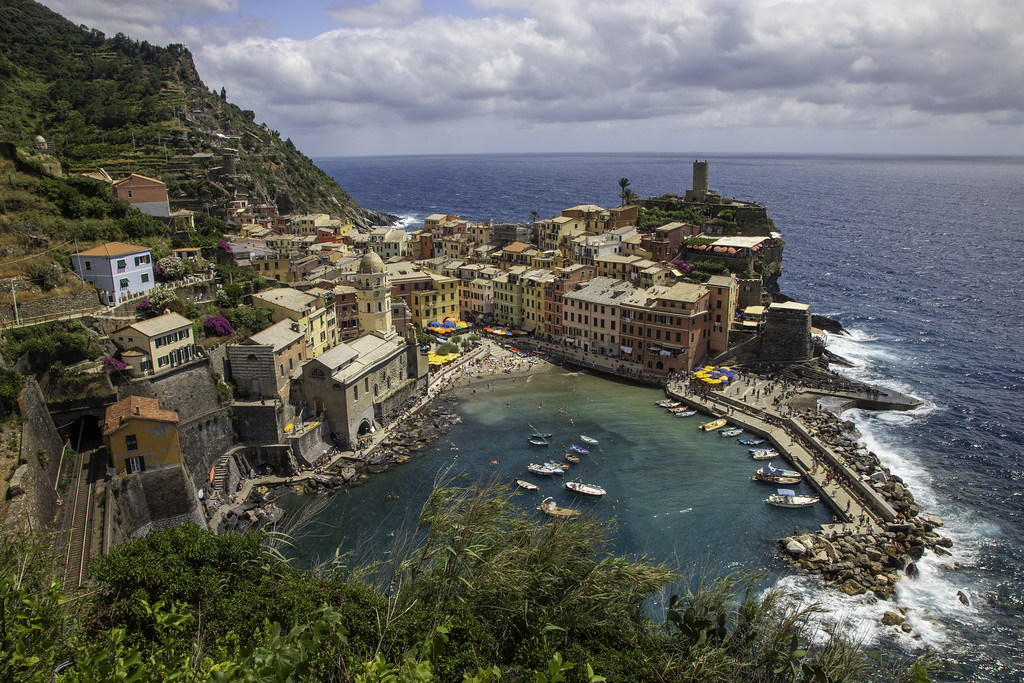
Even though this is a digital shot (on a film-focused site), here’s one of my bucket-list photos from Italy. It’s been captured thousands of times before, but it was one I needed to add to my own catalog of images. I had this photo printed as a 3×4 foot color engineer print through Parabo.Press, and it’s now proudly displayed in my living room.
Vernazza – Cinque Terre, Italy.
Camera: Canon 6DM2

 Utah Film Photography
I feel this. I work from home in the software industry. I work at the same computer I use to process photos and write my blog. After five years I’m starting to feel a light revulsion to sitting here!
LikeLiked by 1 person
Jim, as a daily blogger, you must really resonate with computer fatigue. 🙂
LikeLike